Check Engine
Light Guide
If your check engine light just turned on, you’re not alone. Drivers across Metro Atlanta — including Hiram, Smyrna, and Woodstock — see this warning every day and wonder the same thing: “Can I keep driving, or is this serious?”
This guide breaks down what the light means, the difference between flashing vs solid, the most common causes, when it’s safe to drive, and what to expect during professional diagnostics.
Call Our Stores
Quick Answers
Use the links below to jump to the section you need right now.
Related Check Engine Light Guides
Add links to supporting articles in this topic cluster as you publish them.
What Does the Check Engine Light Mean?
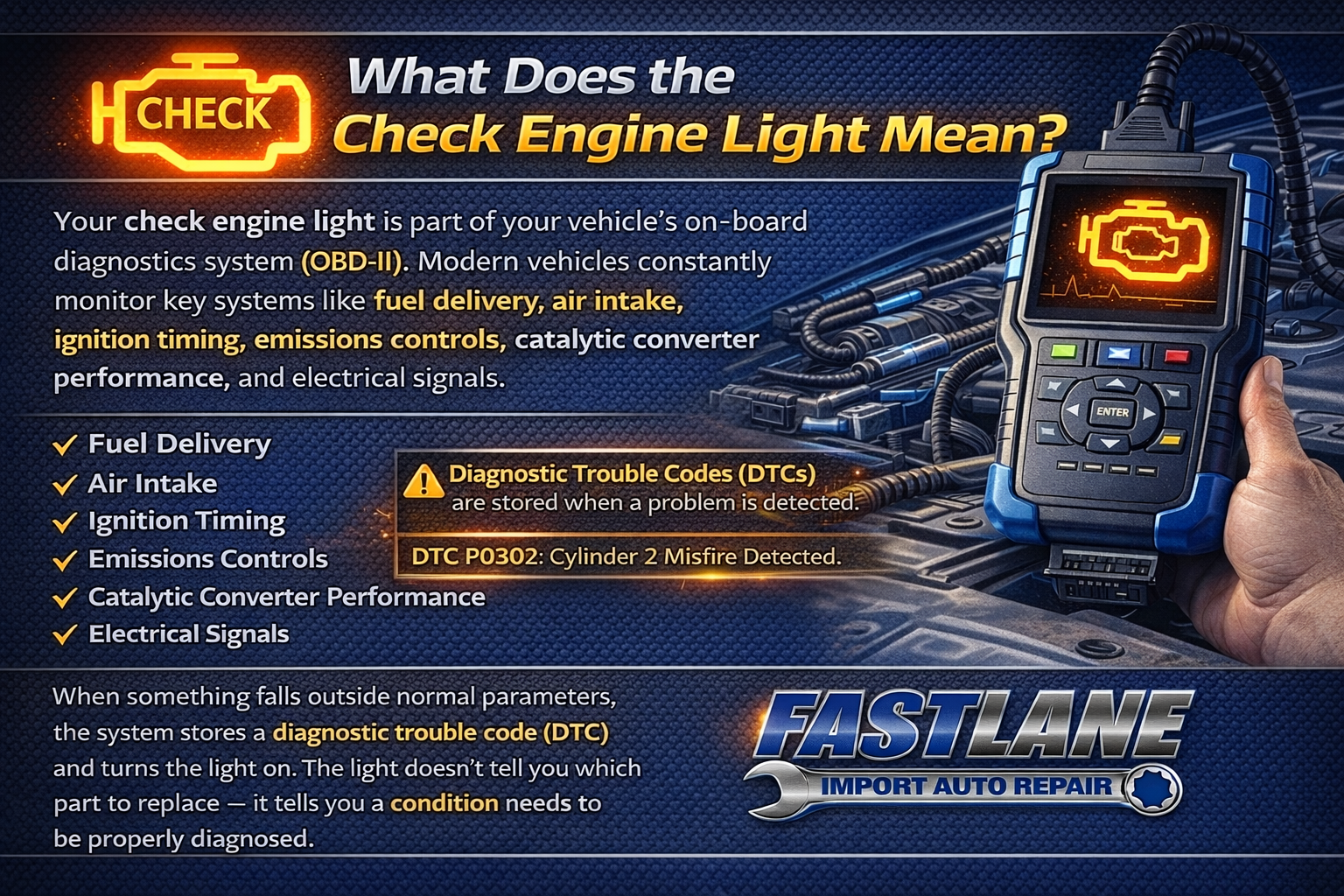
Your check engine light is part of your vehicle’s on-board diagnostics system (OBD-II). Modern vehicles constantly monitor key systems like fuel delivery, air intake, ignition timing, emissions controls, catalytic converter performance, and electrical signals.
When something falls outside normal parameters, the system stores a diagnostic trouble code (DTC) and turns the light on. The light doesn’t tell you which part to replace — it tells you a condition needs to be properly diagnosed.
Flashing vs Solid Check Engine Light
The difference between a solid and flashing check engine light matters. One usually means “schedule soon,” while the other can mean “stop driving to prevent damage.”
Solid (Steady) Light
A steady light often points to a sensor issue or a minor emissions-related fault, such as an EVAP leak (sometimes gas cap related), an oxygen sensor issue, or a small system reading out of range. You can typically drive short distances, but you should schedule diagnostics soon.
Flashing Light
A flashing light commonly indicates an active misfire or severe running condition. Unburned fuel can overheat and damage the catalytic converter. If it’s flashing, reduce speed, avoid heavy acceleration, and schedule diagnostics as soon as possible.
Most Common Reasons the Check Engine Light Comes On
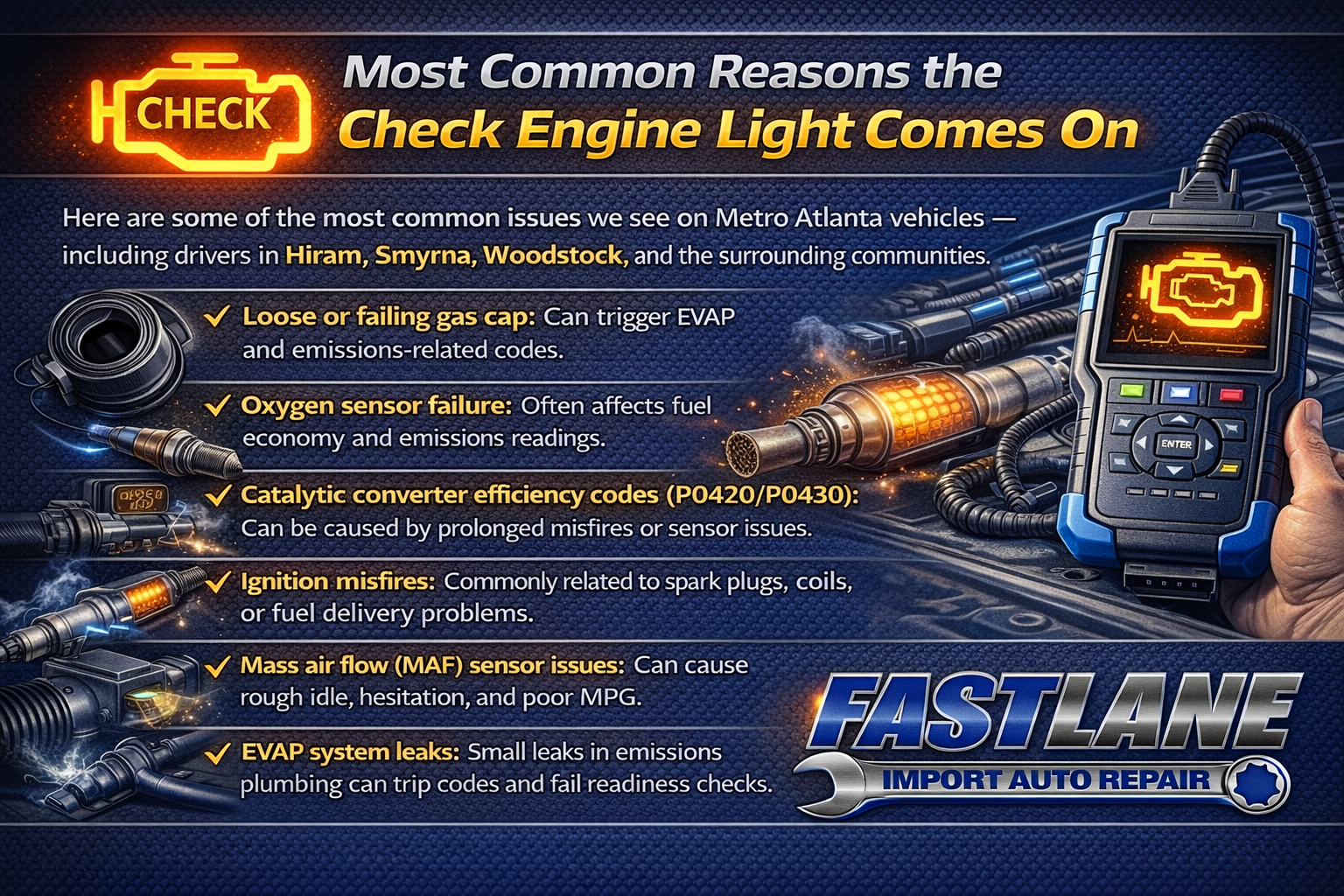
Here are some of the most common issues we see on Metro Atlanta vehicles — including drivers in Hiram, Smyrna, Woodstock, and the surrounding communities.
Loose or failing gas cap: Can trigger EVAP and emissions-related codes.
Oxygen sensor failure: Often affects fuel economy and emissions readings.
Catalytic converter efficiency codes (P0420/P0430): Can be caused by prolonged misfires or sensor issues.
Ignition misfires: Commonly related to spark plugs, coils, or fuel delivery problems.
Mass air flow (MAF) sensor issues: Can cause rough idle, hesitation, and poor MPG.
EVAP system leaks: Small leaks in emissions plumbing can trip codes and fail readiness checks.
Can I Drive With the Check Engine Light On?
Whether you can keep driving depends on the light behavior and how the vehicle feels. Use these guidelines to make a safer decision.
Usually OK for Short Driving
You may be able to drive (briefly) if:
- The light is solid (not flashing)
- The vehicle feels normal
- No loss of power
- No overheating
- No unusual noises or strong fuel smell
Stop Driving and Get It Checked
You should stop driving if:
- The light is flashing
- The engine is shaking or misfiring
- You smell fuel or burning
- The temperature gauge rises
- The vehicle stalls or struggles to accelerate
If you’re unsure, it’s best to schedule diagnostics before a minor issue becomes a major repair.
What Happens During Professional Diagnostics?
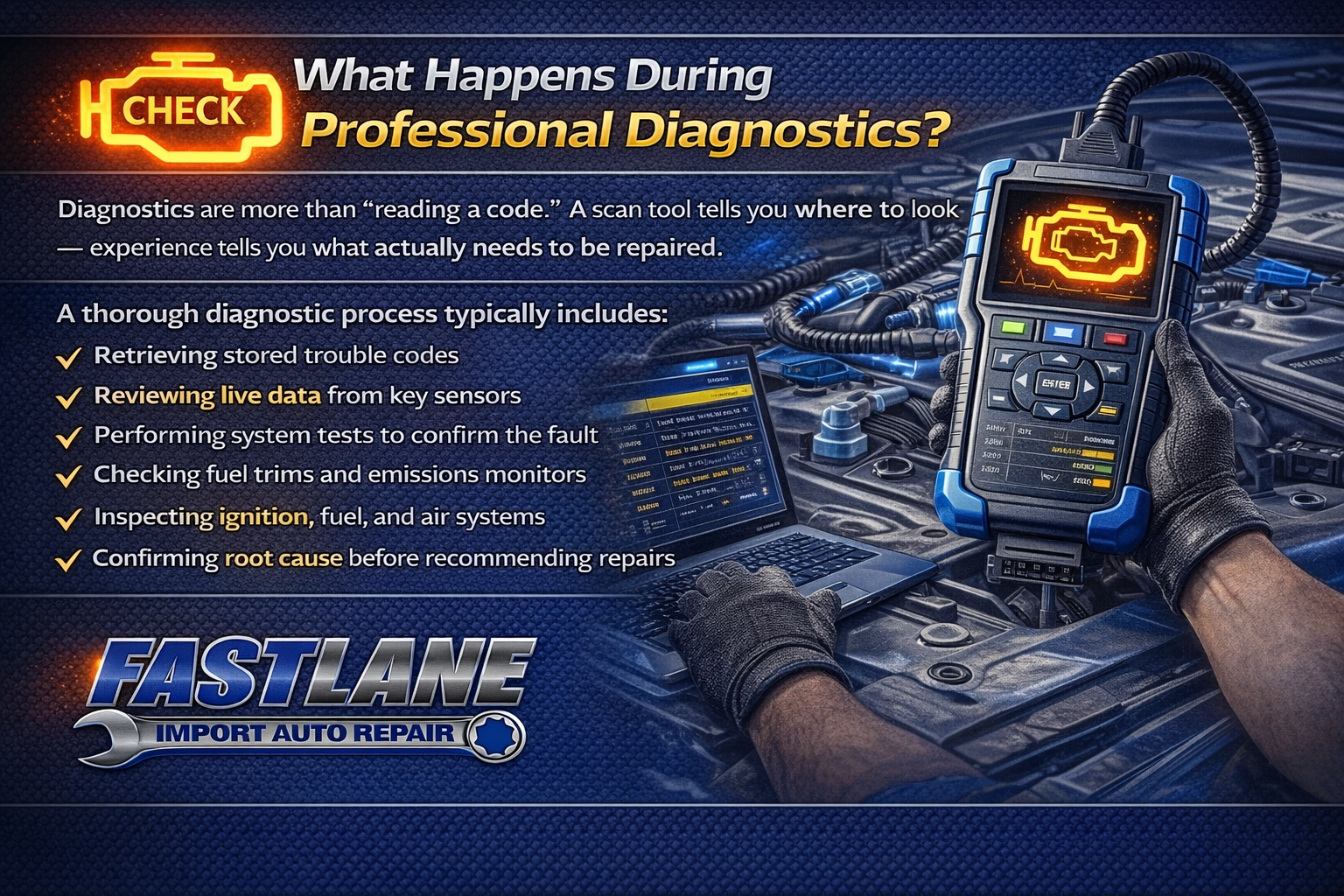
Diagnostics are more than “reading a code.” A scan tool tells you where to look — experience tells you what actually needs to be repaired.
A thorough diagnostic process typically includes:
- Retrieving stored trouble codes
- Reviewing live data from key sensors
- Performing system tests to confirm the fault
- Checking fuel trims and emissions monitors
- Inspecting ignition, fuel, and air systems
- Confirming root cause before recommending repairs
Why Check Engine Lights Are Common in Metro Atlanta
Local driving conditions across Cobb, Paulding, and Cherokee counties can accelerate wear and trigger warning lights. Stop-and-go traffic, short-trip driving, summer heat, and heavy commutes on corridors like I-75 and I-285 all increase stress on emissions, ignition, and sensor systems.
These conditions commonly affect catalytic converters, oxygen sensors, ignition components, and EVAP systems — even when the car seems to run “fine.”
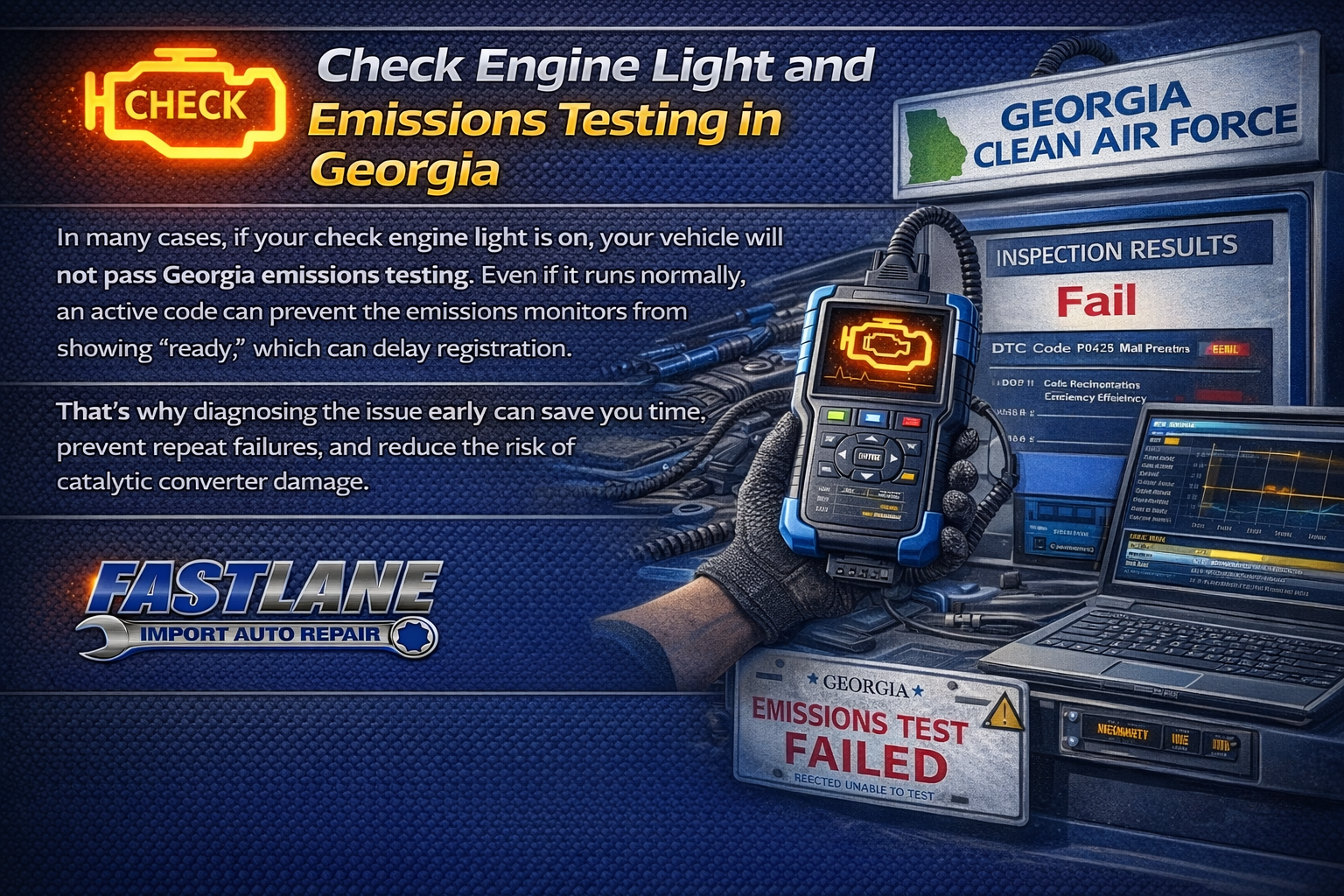
Check Engine Light and Emissions Testing in Georgia
In many cases, if your check engine light is on, your vehicle will not pass Georgia emissions testing. Even if it runs normally, an active code can prevent the emissions monitors from showing “ready,” which can delay registration.
That’s why diagnosing the issue early can save you time, prevent repeat failures, and reduce the risk of catalytic converter damage.
How to Prevent Future Check Engine Light Issues
Not every check engine light is preventable, but smart maintenance and early attention can reduce the likelihood of major failures.
- Stay current on your maintenance schedule
- Replace spark plugs at recommended intervals
- Address misfire symptoms early (shaking, hesitation, rough idle)
- Pay attention to sudden changes in fuel economy
- Use quality fuel and avoid running extremely low
- Don’t ignore warning lights for long periods
- Schedule inspections before long road trips
- Fix small issues before they become expensive repairs
When Should You Schedule Diagnostics?
Schedule a diagnostic appointment if the check engine light stays on longer than a day, the vehicle hesitates or stalls, fuel mileage drops suddenly, the vehicle fails emissions, or the light returns after being cleared.
Small problems rarely fix themselves — they usually become more expensive.

Trusted Check Engine Light Diagnostics in Metro Atlanta
Fastlane Import Auto Repair provides professional diagnostics for drivers throughout Metro Atlanta, including Hiram, Smyrna, Woodstock, and surrounding communities. Our ASE-certified technicians use advanced scan tools and proven diagnostic procedures to identify the real issue — not just replace parts unnecessarily.
Hiram Store Smyrna Store Woodstock StoreSchedule Check Engine Light Diagnostics
If your check engine light is on, don’t ignore it. Early diagnosis can prevent catalytic converter damage, engine damage, failed emissions tests, and higher repair costs. Schedule diagnostics at your nearest Fastlane location today and get a clear answer about what’s happening with your vehicle.
Call Our Stores